Output
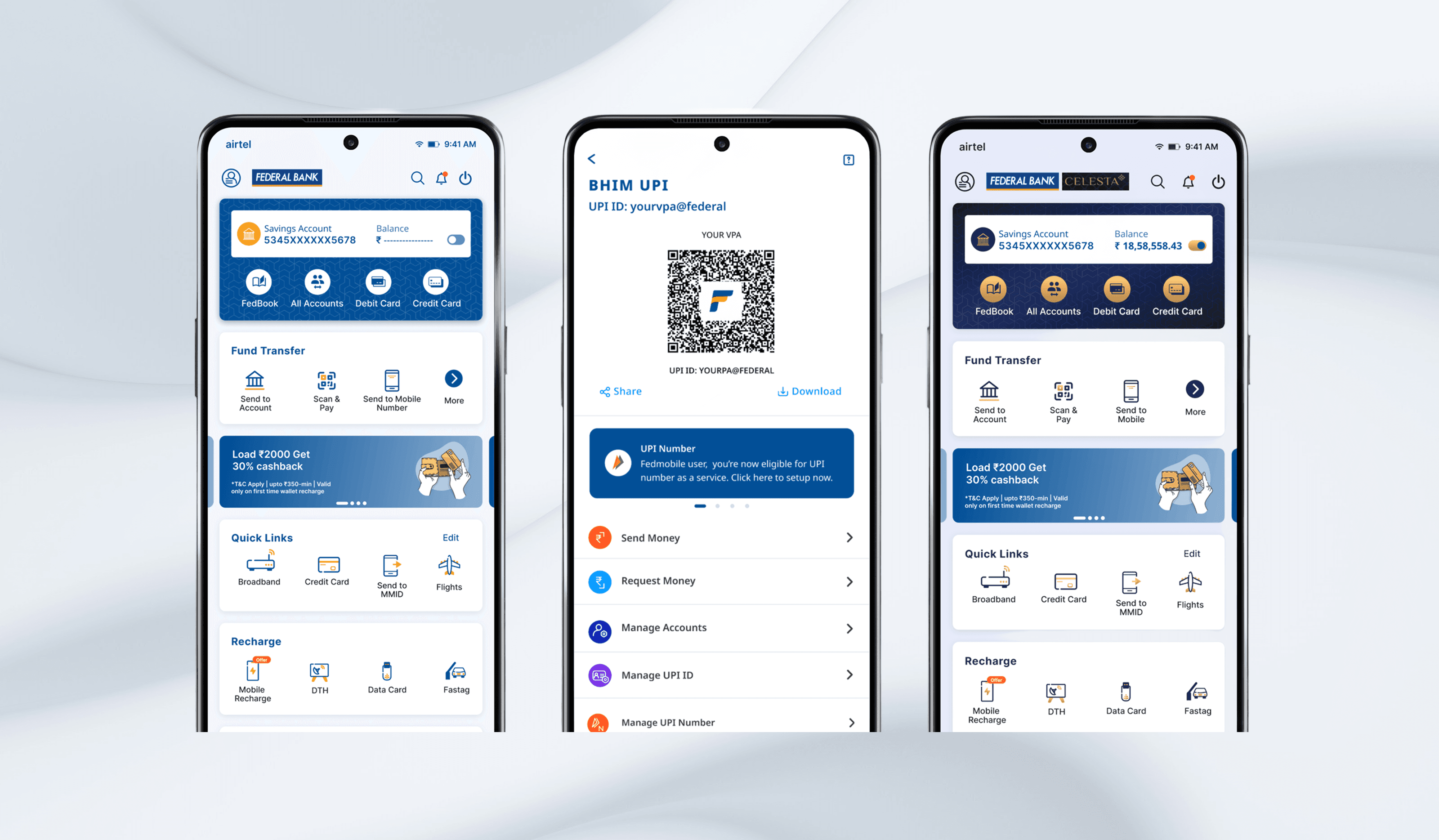
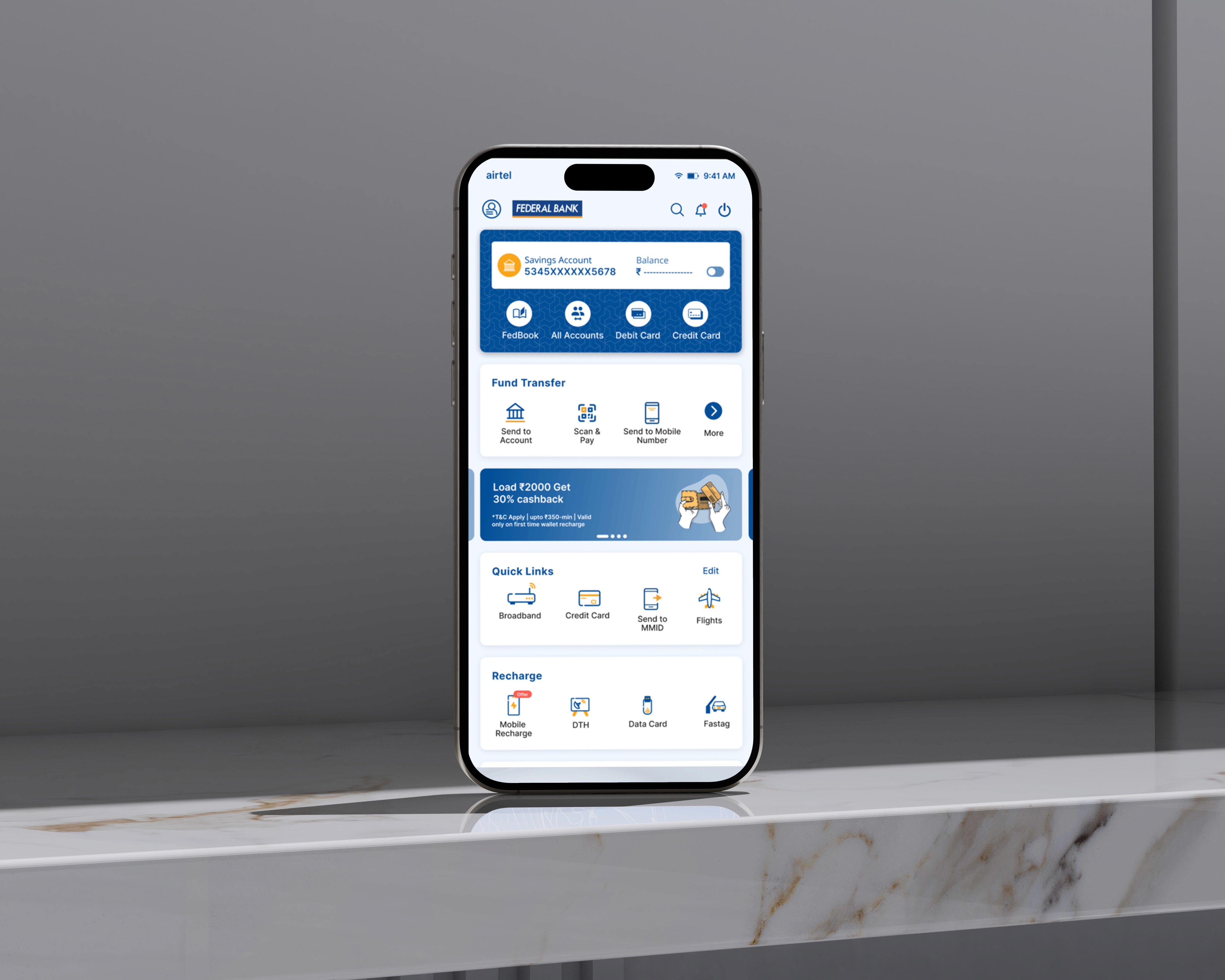
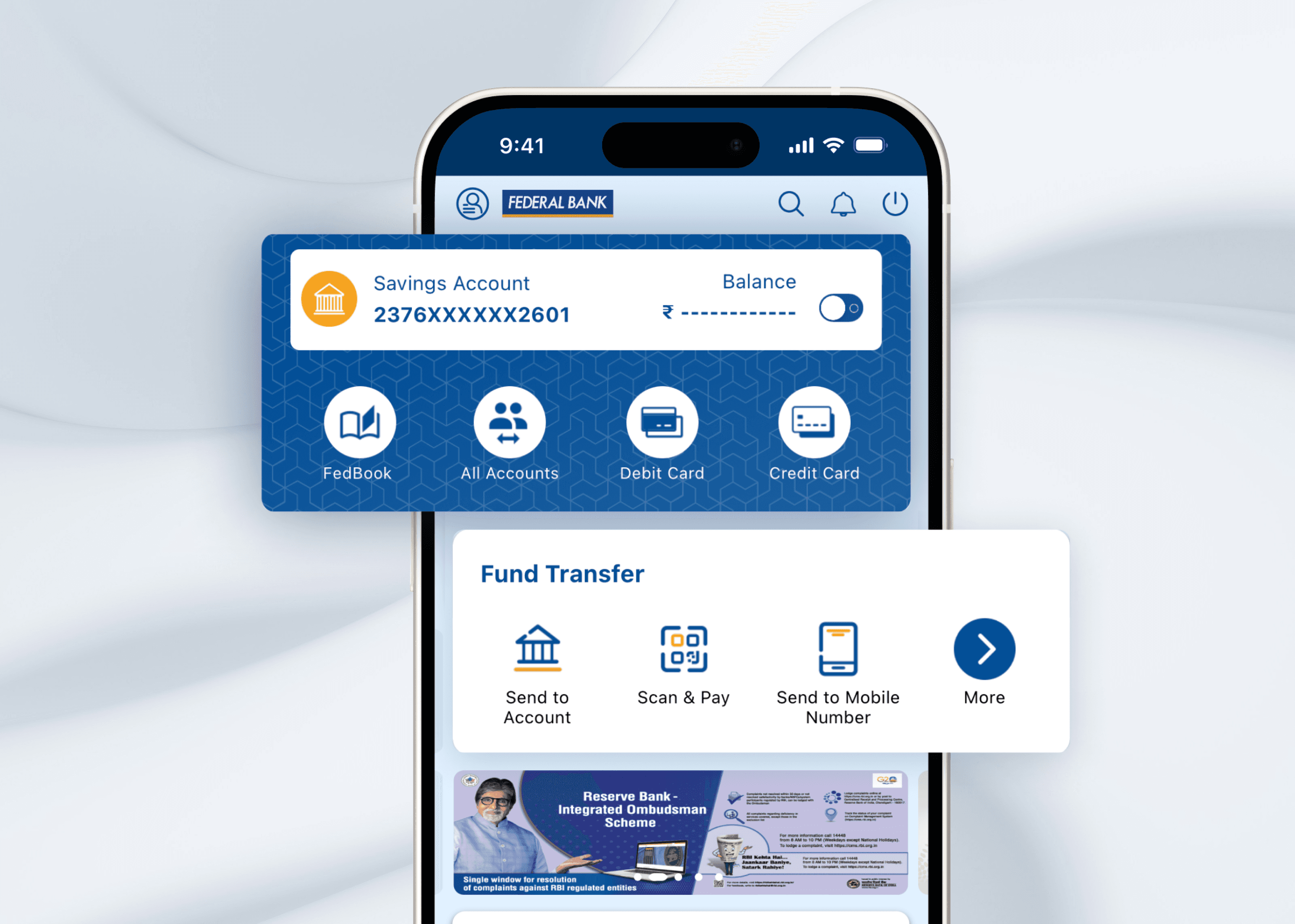
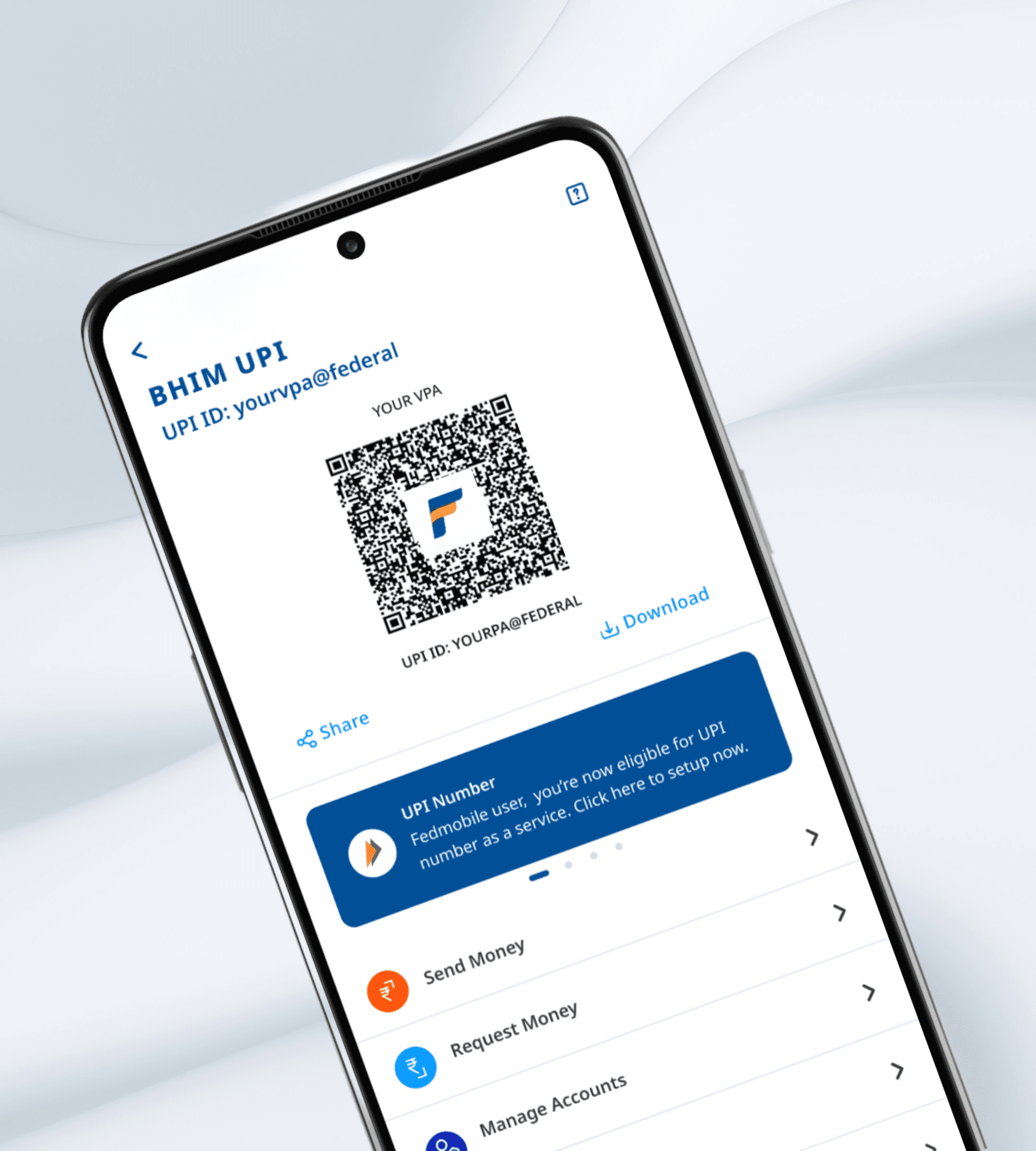
The redesign simplified navigation, improved task completion speed, and made the app feel more approachable for 3.7M+ Daily Active Users across different regions.
As a result, everyday actions like fund transfers, bill payments, and QR-based transactions became faster and more reliable. By reducing confusion and making key features more visible, the design improved accessibility for both metro and non-metro users, creating a consistent and inclusive banking experience.
-20%
reduction in error rates across recharge flows (DTH, mobile, FASTag)
+28%
conversion uplift for FedMobile's 12M+ user base
++
Higher adoption & user satisfaction in tier 3-4 cities
My Role
Reporting to the lead designer, I worked with product managers, developers, and stakeholders
Design and prototype new modules within the established IA and design system
Create high-fidelity mockups consistent with existing UX patterns
Support usability testing and refine designs based on user feedback
Maintain platform-wide visual and functional consistency while introducing improvements
The Challenge: Complex Flows Hindering Daily Banking
Federal Bank's existing mobile app was functional but created friction for users in smaller cities who rely heavily on mobile recharge, bill payments, and quick transaction monitoring.
Recharge flows and transaction management were not very straightforward and confusing
Error handling was poor where failed transactions left users confused and frustrated
Onboarding lacked clarity and there were opportunities to improve
Accessing the account statements required too many steps
The real challenge
Retain customers losing to 3rd party Apps, and other leading banks

Research
We conducted ethnographic research, maintained detailed records, and carried out stakeholder and customer interviews to classify user types. These insights shaped the product scope, refined the value proposition, and informed the creation of personas.
Research findings
Core user base
The majority of users fall between the ages of 27–38, making this the bank’s most active and engaged demographic.
Tech-savvy vs non-savvy divide
Less tech-savvy users rely heavily on third-party apps for simple tasks, while more advanced users use net-banking, but find it too complex and time-consuming.
Fragmented app ecosystem
Users are frustrated with having to juggle between apps like FedMobile, FedBook, and Lotza, which increases cognitive load and storage issues.
Basic usage pattern
A significant number of users only use the app for checking balances and small transfers, with housewives being the majority in this segment.
Feature gaps
Users expressed a strong need for cost management tools, bill payments, and recharge features, which are currently missing or difficult to access.
Solution
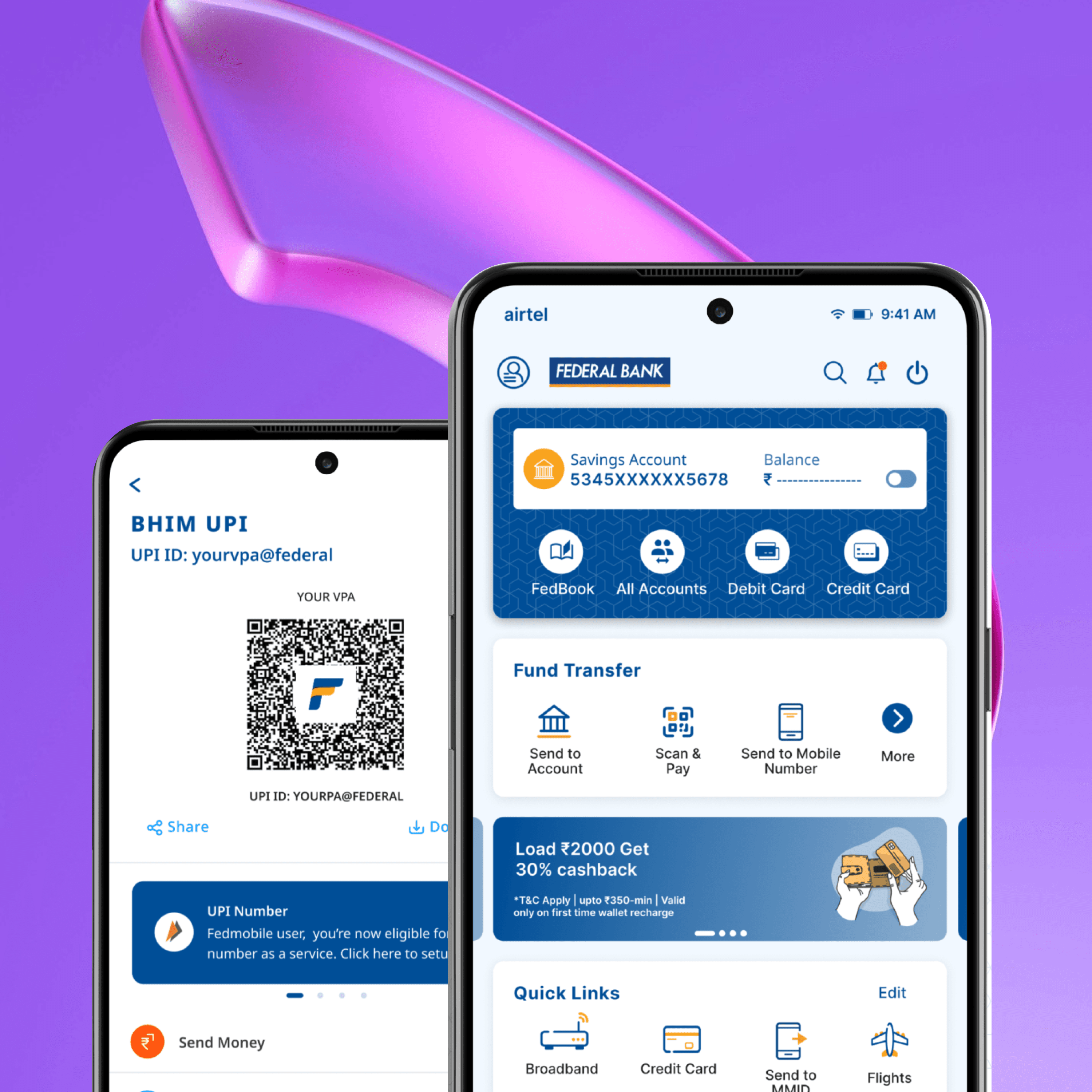
We redesigned FedMobile by merging three separate apps- core banking, merchant services, and payments into one simple, unified experience that feels easier and more convenient to use.
By bringing everything together, users across metro and non-metro regions in India can now find what they need without confusion, complete everyday tasks faster, and feel more confident using the app. The inclusive design especially helped less tech-savvy users, reducing friction and making digital banking more accessible for everyone.

Design Approach: Focusing on Daily-Use Scenarios
I started by looking closely at the most common tasks people performed on the app - recharges, transactions, and onboarding. These were areas where friction was highest, especially for users in smaller cities who relied on mobile banking daily. By breaking down real user scenarios, I was able to identify pain points that needed immediate simplification.
1. Streamlined Recharge Ecosystem
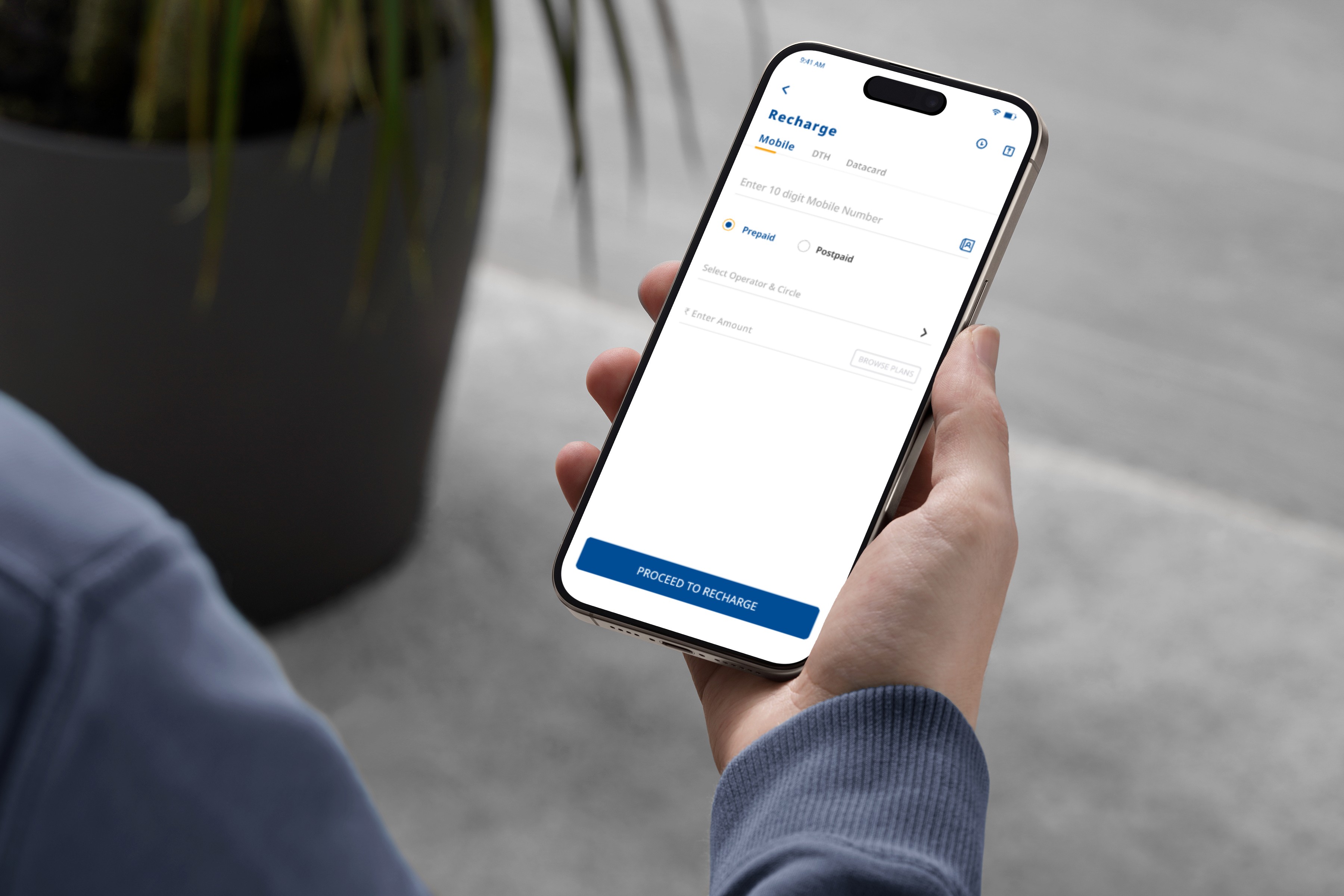
The original recharge flow had 7–8 confusing steps, poor error handling, and frequent failures. I reimagined it as a simple three-step process with smart defaults, auto-fill, and real-time validation. Visual hierarchy changes made CTAs and forms easier to scan, while progressive disclosure kept advanced options tucked away until needed. After launch, recharges became the most-used feature in the app, with a noticeable rise in successful transactions.
2. Effortless Transaction Management
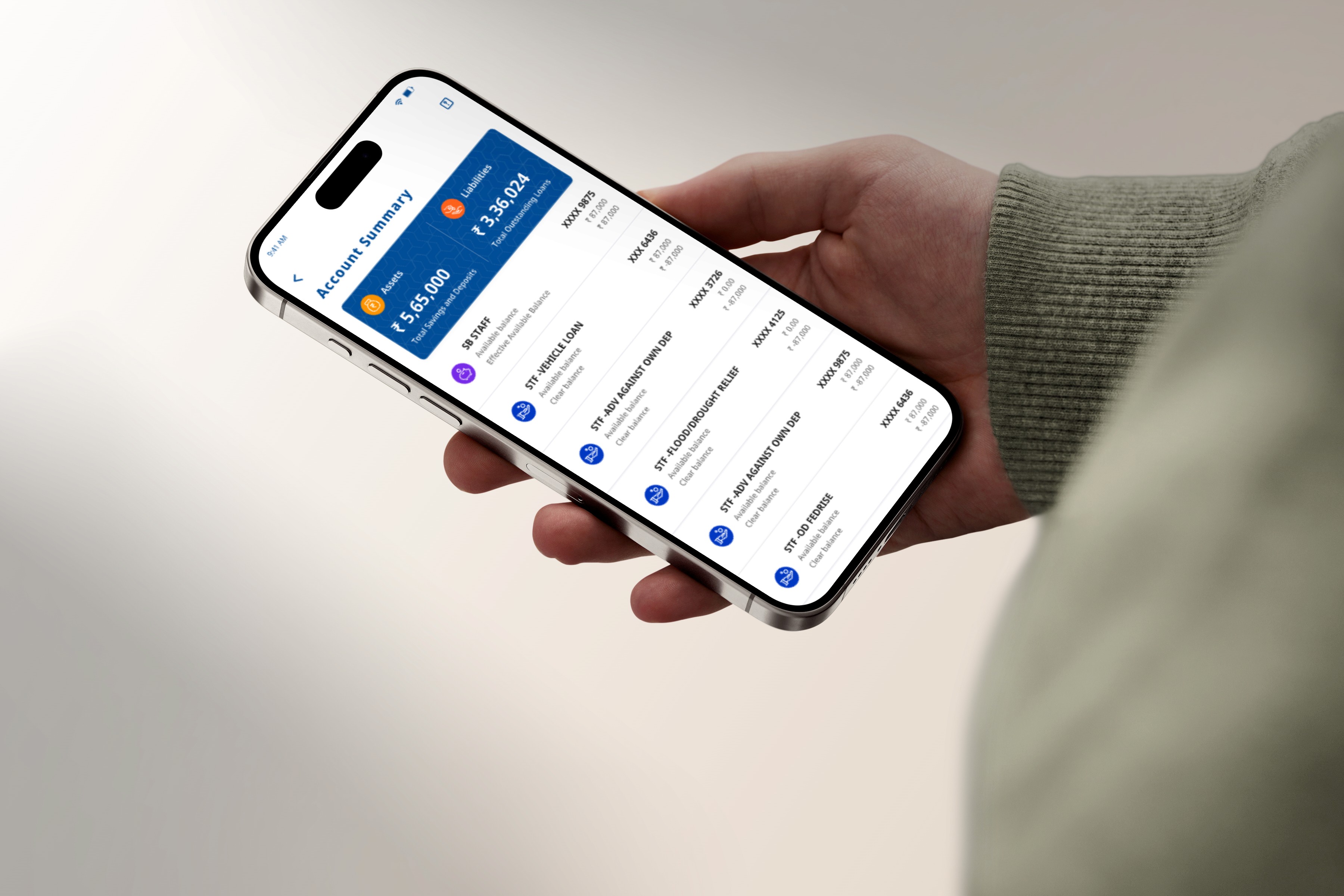
Users needed better ways to track expenses and save records. I introduced one-tap statement downloads, smart filters, and improved categorization. Transactions were displayed as visual cards, making scanning easier, and bulk actions allowed for quicker management. This redesign led to a 17% increase in completion rates for transaction-related tasks.
3. Contextual Onboarding & Edge Cases
New users often felt overwhelmed when stepping into digital banking for the first time. To ease them in, I designed progressive onboarding with custom illustrations that explained complex concepts in simple terms. I also accounted for real-world challenges like poor network connectivity and failed transactions, ensuring edge cases were handled gracefully. Local language adaptability was considered in the layouts, making the experience feel more inclusive.
4. Cross-Flow Consistency
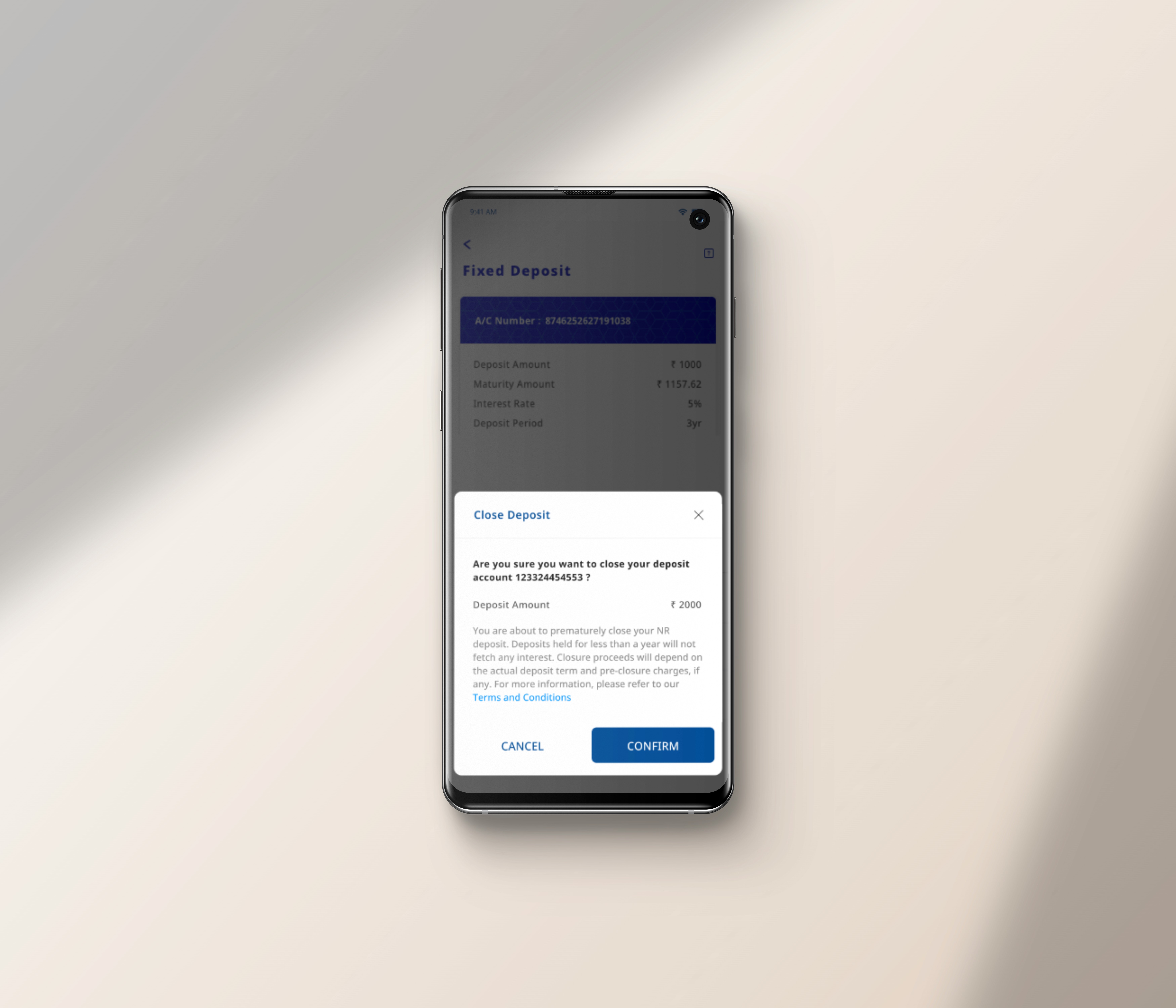
Working across multiple flows, I made sure patterns felt familiar everywhere. Whether recharging, viewing statements, or exploring features, interactions followed the same logic. A unified visual language tied everything together, helping users feel confident that once they learned something in one flow, it worked the same way elsewhere.
Collaboration & Process
Since the team was remote-first, alignment was critical. I collaborated daily with the design lead and PM to resolve blockers, and joined weekly calls with Federal Bank stakeholders to validate decisions. My deliverables ranged from low-fidelity wireframes and flow diagrams to high-fidelity designs with detailed interactions. Interactive prototypes supported developer handoff, while thorough edge case documentation covered error states, loading, and network issues.
Although the design lead made final calls, I was trusted with autonomy in my assigned flows. This balance gave me the freedom to propose new ideas while maintaining consistency within the design system, ensuring the final product was cohesive yet forward-looking.
Key Learnings
We redesigned FedMobile by merging three separate apps core banking, merchant services, and payments into one simple, unified experience that feels easier and more convenient to use.
By bringing everything together, users across metro and non-metro regions in India can now find what they need without confusion, complete everyday tasks faster, and feel more confident using the app. The inclusive design especially helped less tech-savvy users, reducing friction and making digital banking more accessible for everyone.
Next Steps
This project gave me the confidence to take ownership of complex user flows within a larger team structure. The lessons I learned from handling critical banking journeys to collaborating across roles, directly shaped how I approached later projects.
Moving forward, I’ve continued to apply these insights to full-stack product design challenges, focusing on building products that balance usability, inclusivity, and impact.
The redesigned Federal Bank app now serves millions of users across India, with the recharge and transaction management flows I worked on remaining central to the experience.